


Europe’s battery storage capacity will grow from 43 GW to 178 GW between 2025 and 2030
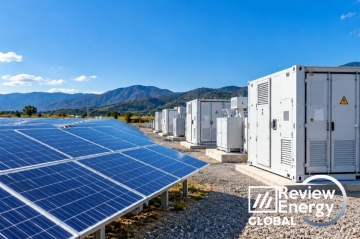
The European Union’s battery storage capacity could increase more than fourfold over the next five years, rising from 43 GW in 2025 to 178 GW by 2030, according to a new report from Ember. The expansion of storage, combined with smarter electric vehicle charging and heat pump operation, could significantly reduce the need for gas-fired power plants to balance the electricity system while enabling greater integration of wind and solar power.
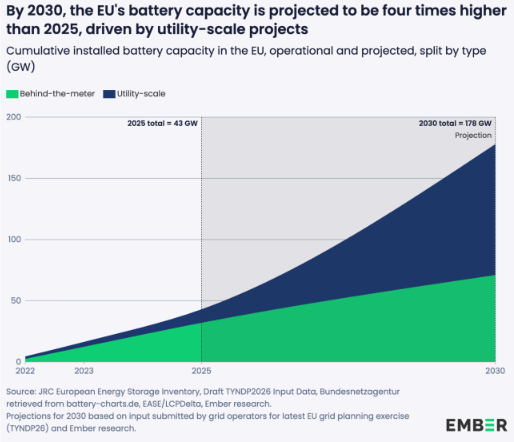
Source: Ember
The analysis highlights batteries and demand-side flexibility as emerging alternatives to fossil-fuel-based balancing technologies. According to Beatrice Petrovich, Senior Analyst at Ember, the rapid deployment of batteries will make it possible to store excess renewable electricity during periods of high generation and deliver it later when solar and wind output declines.
Utility-scale batteries to drive growth
The report identifies utility-scale battery storage as the main growth driver across Europe. By the end of 2025, the EU had approximately 3 GW of battery storage capacity for every 100 GW of installed wind and solar capacity, equivalent to a ratio of 3%.
By 2030, that figure is expected to increase to 12%, strengthening the role of batteries as a key tool for managing renewable energy variability.
In addition, Ember estimates that utility-scale batteries could provide short-term flexibility services at a cost approximately 20% lower than new gas-fired power plants, improving their competitiveness against conventional technologies.
 Source: Ember
Behind-the-meter storage also expands
Residential and commercial battery storage is also expected to grow significantly, with installed capacity projected to double by 2030.
Currently, behind-the-meter batteries can shift around 12% of daily rooftop solar generation from peak solar production hours to the evening period. By the end of the decade, that share could rise to 17%, increasing self-consumption and reducing pressure on the grid.
According to Ember, battery discharge capacity across the EU is expected to exceed 80% of the hourly output of gas-fired power plants by 2030, compared with just 25% in 2025.
Electric vehicles and heat pumps will add flexibility
The report also underscores the growing role of consumers in supporting power system flexibility.
By 2030, one in every six vehicles in the EU is expected to be electric. Around half of those vehicles could charge during periods of abundant renewable generation and lower electricity prices.
At the same time, approximately one in five European households could be equipped with a heat pump, with up to 15% of their electricity consumption shifted to periods of strong solar and wind generation without affecting user comfort.
Together, these technologies could reduce peak demand, ease grid congestion, and lower the need for fossil-fuel-based backup generation.
National flexibility targets expected in 2027
Ember notes that the pace of deployment will depend heavily on regulation and market signals.
In January 2027, all EU member states are expected to publish, for the first time, national targets for energy storage and demand-side flexibility. According to the report, removing regulatory barriers, accelerating the rollout of smart meters, and creating incentives for consumer flexibility will be essential to unlocking the full benefits of these technologies.
The organization concludes that a rapid expansion of battery storage, electrification, and demand-side flexibility could help avoid additional investments in gas-based backup infrastructure while supporting the continued growth of renewable energy across Europe.



Comentarios
Sé el primero en comentar...